
By: Richard L. Smith
Residents and township officials in Bloomfield continue to debate a proposed sewer fee restructuring plan that local leaders say would lower costs for most households while shifting more of the burden to high-volume commercial users.

During a virtual public information session Thursday evening that this reporter attended, township officials spent about an hour, but 24 minutes as a zoom meeting, breaking down the details of the proposed ordinance, explaining how the current sewer funding system works and why Bloomfield is considering moving to a separate user-fee model.
Under the proposal, sewer costs — currently embedded in property taxes — would instead be billed separately through a structure similar to a water bill, using a combination of flat fees and usage-based charges tied to water consumption.
According to township officials, the change is projected to reduce sewer costs for approximately 98% of Bloomfield households.
Presentation materials shared during the meeting stated that the average residential taxpayer currently pays about $211 annually toward sewer costs through property taxes.
Under the proposed system, the average bill would drop to roughly $100 annually, resulting in an estimated savings of about $111 per year.
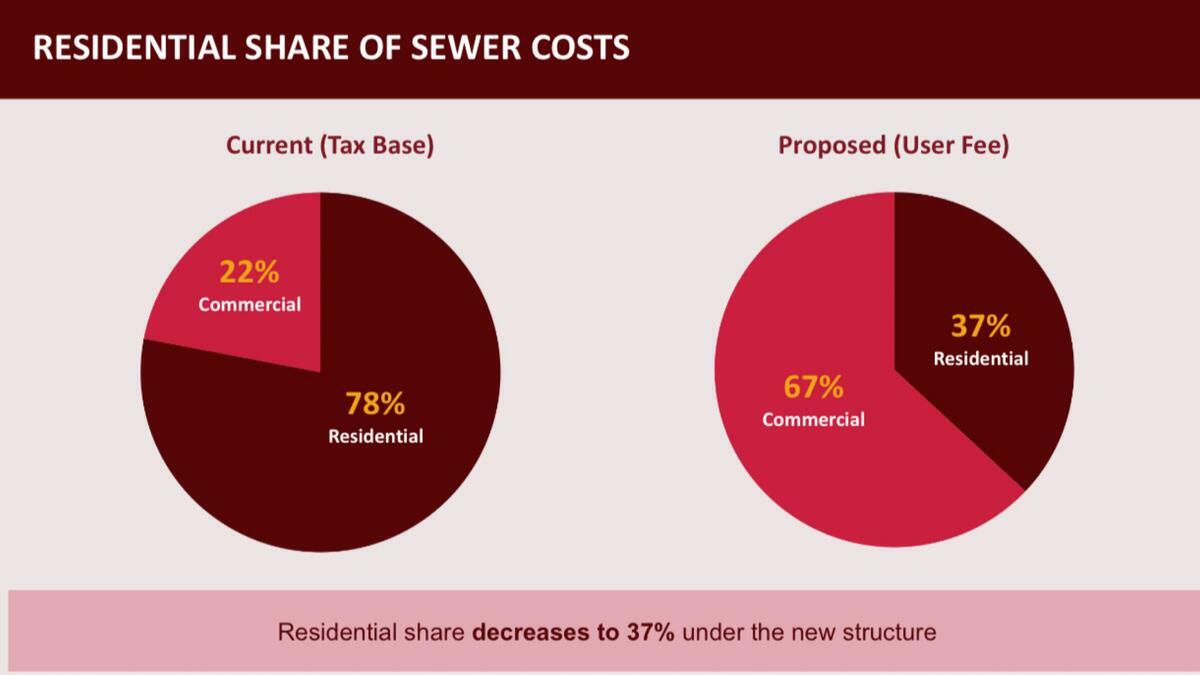
Officials also presented data showing that residential properties currently cover about 78% of the township’s sewer costs under the tax-based system, while the proposed user-fee structure would reduce the residential share to approximately 37%, with more costs shifting to larger commercial and industrial users.
The township said the proposal was developed in response to rising regional sewer costs imposed by the Passaic Valley Sewerage Commission (PVSC), which officials said have increased more than 35% over the last four years.
Mayor Jenny Mundell announced that the Township Council has postponed the ordinance’s second reading to allow residents additional time to review the proposal and ask questions.
“As part of the community input process for the proposed sewer fee collection transition, my Township Council colleagues and I have been speaking directly with residents to garner your feedback,” Mundell said in a statement released by the township.
“During our conversations, some have requested additional time to learn more about the proposal, and we heard you.”
Township Auditor Steven Wielkotz said during the discussion that the proposal is not tied to financial instability within the municipality, noting Bloomfield recently received strong credit ratings from Moody’s.
“What municipalities across the state are facing is sustained external cost pressure — particularly from regional sewer rates,” Wielkotz said. “Moving to a usage-based model is a sound, transparent way to recover those costs while ensuring they are distributed fairly.”
Still, not all residents are convinced.
Some residents have raised concerns that removing sewer costs from the municipal tax levy could reduce taxpayer protections under New Jersey’s property tax cap laws.
Critics have also argued that residents could lose potential federal tax deductions because sewer costs would no longer be included in property taxes.
Others questioned whether future sewer fee increases could eventually rise faster than traditional property tax increases because separate utility-style fees are not subject to the same levy caps.
Township officials pushed back against those claims during the information session, emphasizing that the proposal does not create a new cost but instead changes how existing sewer expenses are collected.
Officials repeatedly stressed that large commercial properties, industrial facilities, laundromats, car washes, and some PILOT developments currently do not pay sewer costs proportionate to their actual usage under the existing property tax structure.
Presentation graphics shown during the meeting illustrated how the township plans a phased implementation of the program, with approximately $3 million of Bloomfield’s roughly $5 million annual sewer expenses initially transitioning into the user-fee system.
The debate has sparked significant discussion across social media and community forums in recent weeks, with residents expressing both support and skepticism as the township continues its public outreach efforts.
Bloomfield officials said additional educational materials and frequently asked questions are available to the public as the township continues reviewing feedback before the ordinance returns for another public hearing and council vote.