
By: Richard L. Smith
Growing up in Newark as a young boy, I remember something about attending 13th Avenue School that I didn’t fully appreciate until I became an adult: free dental care was just a short walk away.
Every year, from third through fifth grade, we would walk from our school to what we called College Hospital, now associated with Rutgers School of Dental Medicine, where dental students, closely supervised by their professors, worked on our teeth.
And this wasn’t just a quick cleaning or someone showing us how to brush.
I remember having root canals, teeth pulled, cleanings, and other extensive dental work. The students performed the procedures while experienced dental professionals supervised their work.
Was it scary? Absolutely.
Walking back to school with a numb mouth, sometimes uncomfortable and in pain, wasn’t exactly the highlight of my childhood.
But looking back, those visits provided something incredibly valuable: consistent dental care that didn’t cost our families anything.
After fifth grade, those annual visits ended for me. And as the years passed without that same consistency, I noticed my dental health beginning to decline.
Now, as an adult, I’ve learned that even with good dental insurance, getting the care you need can be surprisingly expensive.
That’s why a troubling New Jersey health statistic caught my attention.
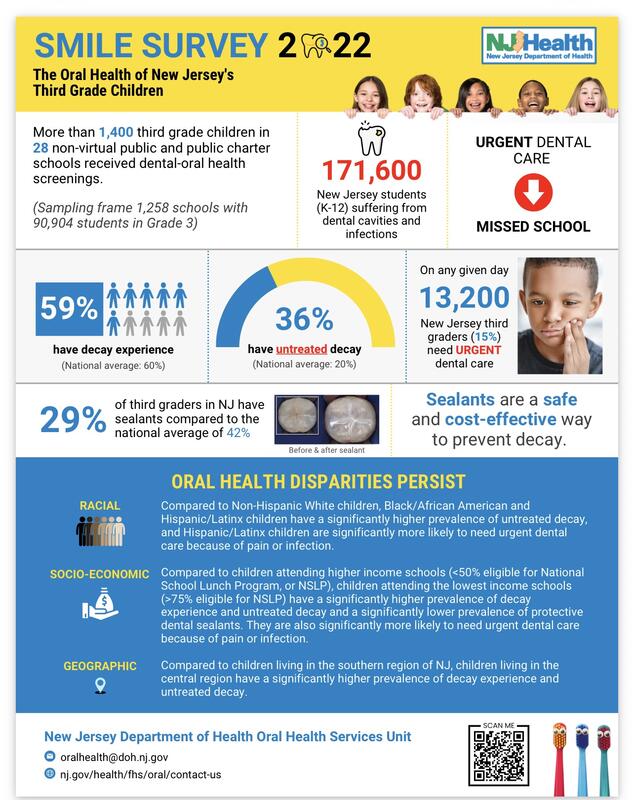
According to the New Jersey Department of Health’s 2022–2023 Smile Survey, 36% of third graders had untreated tooth decay, compared with a national average of 20%.
The survey also found that 15% needed urgent dental care.
Although those findings are several years old, the concerns surrounding children’s dental health have continued.
In January 2025, the New Jersey Health Care Quality Institute released an investigation revealing serious barriers for families seeking dental care through Medicaid.
Researchers contacted 824 dental practices listed in the state’s five Medicaid managed care networks and found that 51% of the time, providers would not schedule an appointment for a two-year-old child.
The findings raised troubling questions about whether having dental insurance actually guarantees access to treatment.
For families already struggling financially, those barriers can mean untreated cavities, infections, and dental problems that become more serious over time.
There is, however, some encouraging news.
In 2026, Rutgers School of Dental Medicine expanded school-based preventive dental services, bringing screenings, education, and protective sealants to elementary students in Franklin Township, Somerset County.
It’s a reminder of what I experienced decades ago in Newark: dental care reaching children where they are, before small problems become expensive ones.
I often think about those walks from 13th Avenue School. At the time, we were just kids heading to another appointment, sometimes dreading what awaited us in that dental chair.
Today, I actually see those visits differently.
They were an investment in our health, and perhaps one of the most valuable services we received during those elementary school years.
And while dental technology and treatments have advanced considerably, one basic question remains: What good is dental coverage if families cannot find affordable, consistent care for their children?
Sometimes, improving the future means remembering something that worked in the past.
It most certainly for me while at 13th Ave. school in Newark.
Sources: New Jersey Department of Health, 2022–2023 Smile Survey; New Jersey Health Care Quality Institute, January 7, 2025 Medicaid Dental Access Investigation; Rutgers School of Dental Medicine school-based prevention initiative, reported August 2026.