
By: Richard L. Smith
Tuesday morning marks the first regular weekday commute of a challenging five-week period for thousands of New Jersey Transit passengers heading into New York City, as the final phase of construction on the new Portal North Bridge brings significant changes to train schedules and travel routes.

Although the service adjustments began Sunday and continued through Monday’s Columbus Day holiday, today’s commute is expected to provide a clearer picture of how the construction will affect workers and other passengers traveling into Manhattan during the regular workweek.
According to information released by NJ Transit and Amtrak, the final phase involves transferring the remaining railroad track from the 116-year-old Portal Bridge to the newly constructed Portal North Bridge over the Hackensack River.
The work is expected to continue through November 14, with regular NJ Transit schedules scheduled to resume Sunday, November 15, pending final safety testing.
For commuters, that means approximately five weeks of adjusted schedules, fewer trains, additional transfers and potentially crowded stations, particularly during morning and evening rush hours.
One of the biggest challenges will involve passengers who normally travel directly into New York Penn Station.
During construction, trains will operate on just one track between Newark and Secaucus, limiting the number of trains that can enter and leave Manhattan.
Northeast Corridor and North Jersey Coast Line passengers will experience reduced service and modified schedules.
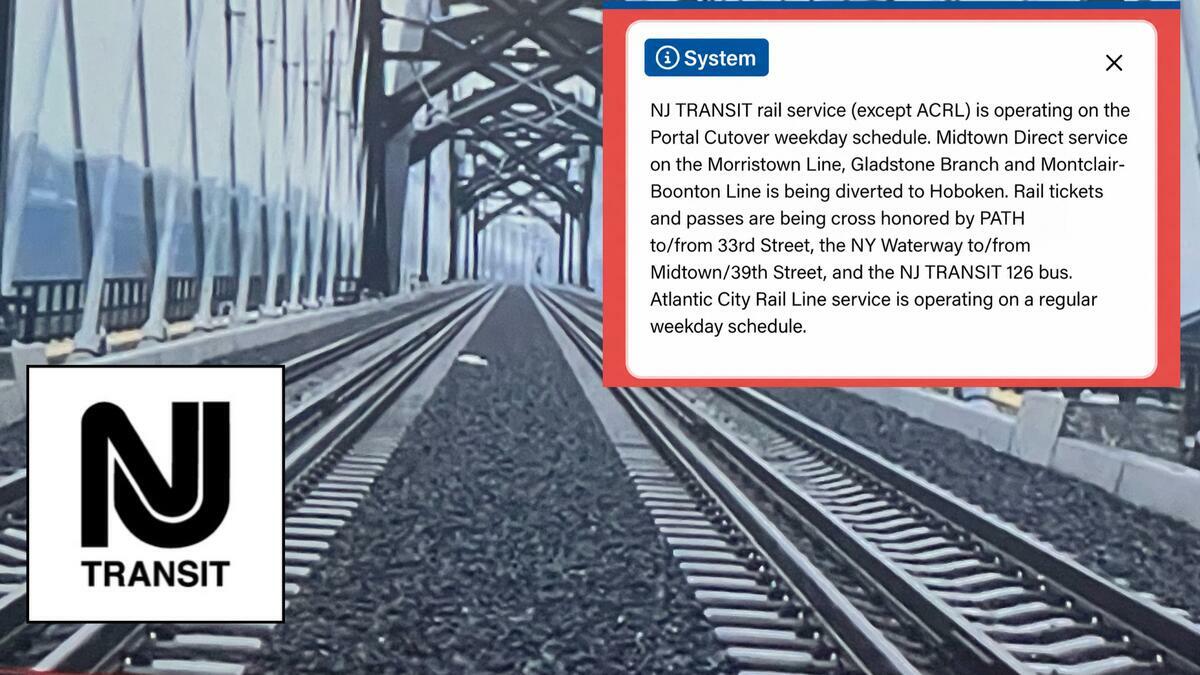
Meanwhile, weekday Midtown Direct trains operating along the Morris & Essex, Gladstone Branch and Montclair-Boonton lines will be diverted to Hoboken Terminal instead of continuing into New York Penn Station.
Approximately 30,000 weekday Midtown Direct passengers could be affected by the changes, according to NJ Transit figures reported by CBS New York.
Passengers arriving in Hoboken will have to make additional connections to reach Manhattan.
Transportation officials have arranged for eligible NJ Transit tickets and passes to be accepted on designated PATH trains, NY Waterway ferries and NJ Transit’s Route 126 buses.
PATH officials are also increasing service during peak commuting hours to accommodate the additional passengers.
However, commuters should prepare for crowded platforms, longer travel times and potential delays as thousands of riders adjust to the temporary arrangements.
Raritan Valley Line passengers who normally enjoy direct service into New York Penn Station will also have to transfer at Newark Penn Station during the construction period.
The Portal North Bridge project represents a major investment in New Jersey’s transportation infrastructure.
The new bridge replaces a railroad crossing that opened in 1910 and has long been a source of frustration for commuters.
Unlike the original bridge, which must swing open to allow boats to pass along the Hackensack River, the new structure stands approximately 50 feet above the water, allowing marine traffic to travel underneath without interrupting train service.
Over the years, mechanical problems involving the aging bridge have caused significant delays along one of the busiest passenger railroad corridors in the country.
The approximately $1.56 billion construction project is part of the larger Gateway Program, designed to improve rail reliability and eventually expand transportation capacity between New Jersey and New York.
While transportation officials say the completed bridge will eliminate a longstanding source of delays, commuters will first have to navigate several weeks of inconvenience.
NJ Transit is strongly encouraging passengers to review their updated schedules before leaving home, consider alternative transportation and allow additional time to reach their destinations.
For passengers who depend on arriving at work, school or appointments on time, leaving home at their usual hour may no longer be enough.
The most important message for commuters beginning Tuesday morning is simple: plan ahead, know your alternative routes and prepare for a different daily commute.
The long-term promise is a more reliable railroad connection into Manhattan.
But for the next five weeks, getting there could require considerably more patience.