
By: Richard L. Smith
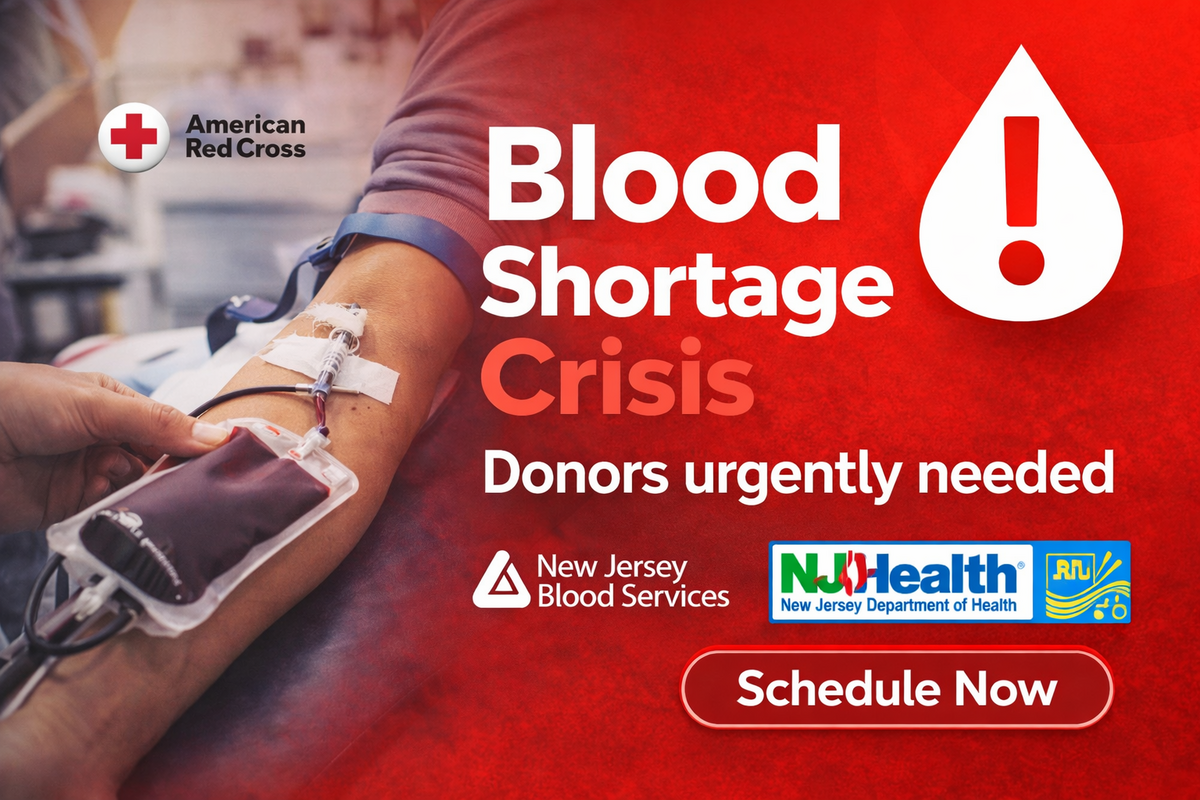
A severe national blood shortage is unfolding across the United States, with critical impacts on health care systems and a particular strain on blood supplies serving hospitals in New Jersey.

According to a report by Reuters, the American Red Cross has warned that the nation’s blood supply has fallen dramatically in recent weeks as demand outpaces donations.
The organization, which supplies about 40 percent of the country’s blood, says inventories have dropped by roughly 35 percent over the past month due to a combination of factors including extreme winter weather, widespread flu activity, and canceled blood drives.
The shortage has serious implications for patients who rely on blood transfusions.
Blood is essential not only for emergency trauma care but also for surgeries, childbirth, cancer treatments, and support for patients with chronic conditions such as sickle cell disease.
Without enough blood on hand, hospitals may be forced to make difficult decisions about how to allocate critically low supplies of certain blood types.
In New Jersey and the broader tri-state area, the situation is already critical. 
According to the New Jersey Department of Health, blood donations have fallen by nearly 40 percent in recent weeks, leaving regional blood banks with less than a two-day supply to meet hospital demand.
This shortage was declared a blood emergency by New York Blood Center and New Jersey Blood Services after holiday disruptions, severe weather, and record levels of seasonal illness combined to sharply reduce available donations.
Officials say typical seasonal patterns, where cold weather and flu season naturally depress donor turnout, have been amplified this year.
Winter storms have forced cancellation of hundreds of scheduled blood drives, further shrinking available supplies at a time when hospitals are experiencing high demand.
The shortage has particularly affected supplies of universal and rare blood types, including O-negative, A-negative, and B-negative.
These types are vital for emergency situations where there may not be time to match a patient’s blood type before transfusion.
To address the crisis, health care systems and advocacy groups in New Jersey have launched targeted efforts to encourage eligible donors to give.
Organizations like RWJBarnabas Health are hosting a series of blood drives across the state in January and February, emphasizing that a single donation can help save up to three lives.
Eligible residents are urged to make appointments to donate at local centers or events, especially during National Blood Donor Month.
New Jersey health officials stress that even amid cold weather and flu season, donating blood is safe and crucial for community health. 
Each donation helps ensure that hospitals have the resources they need to provide lifesaving care — and helps protect patients facing emergencies, treatment for chronic illnesses, and complex medical procedures.