
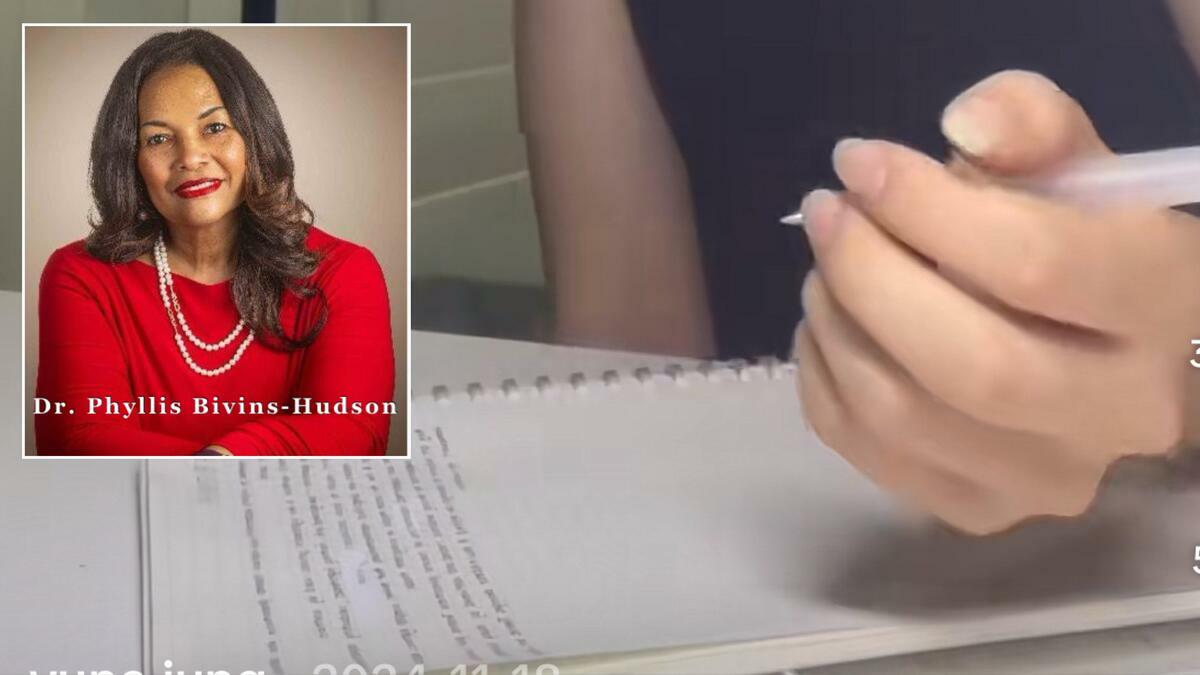
By: Dr. Phyllis Bivins-Hudson
There is something about September that feels different.
August gave us that familiar sense that change was coming. The evenings began arriving a little earlier. 
Vacation days started disappearing from the calendar. Store aisles quietly traded summer displays for notebooks, backpacks, and school supplies. We knew a new season was approaching.
And now, here we are. September has arrived.
For children, educators, parents, caregivers, college students, and adult learners, September often represents a beginning. New classrooms. New instructors. New expectations.
New schedules. New opportunities.
But this year, I want to suggest that we approach the beginning a little differently.
Let’s not wait until something goes wrong before we become involved.
Too often, educational support becomes reactive. A failing grade appears. An assignment is missing. A teacher calls home. A student suddenly says, “I don’t understand anything we’re doing.” 
And then everybody scrambles. What if this year we made a preemptive strike? Not against our children. Not against teachers. Not against schools.
But against the possibility of a child silently falling behind before anyone realizes help is needed.
Start Before There Is a Problem
Parents and caregivers, you do not have to understand every subject your child is studying to be an active participant in their education. You simply have to remain curious.
Ask questions that require more than “fine” as an answer. Instead of: “How was school?” Try: “What was the most interesting thing you learned today?” “What was difficult today?”
“Is there anything you understand less today than you did yesterday?” “What assignment are you most concerned about this week?” “Is there something you need from me?”
Those few minutes of conversation can reveal far more than a report card several weeks later.
And don't wait for parent conferences to introduce yourself to your child's teacher.
Learn how the teacher communicates. Know where assignments are posted. Familiarize yourself with the school’s parent portal. Check grades before there is a crisis.
Most importantly, help your child understand that asking for help is not evidence of failure. It is evidence of self-awareness.
Know Where Help Lives
One of the greatest gifts we can give students is the knowledge that support exists in more than one place. If a child begins struggling academically, families can explore resources such as:
- the classroom teacher;
- school counselors;
- intervention or academic support teams;
- tutoring programs;
- after-school homework assistance;
- school or public libraries;
- community organizations;
- mentoring programs;
- college students or responsible older students who provide tutoring;
- online resources recommended by the school; and
- other trusted adults who can help the student organize, plan, and advocate for themselves.
The key is to seek support early.
A child who does not understand one concept today may be trying to understand five connected concepts three weeks from now. Early intervention does more than improve grades. It protects confidence.

And Parents—This Includes You
There is another group I want to invite into this conversation this season: adults who are students themselves. Perhaps you have returned to college. Perhaps you are completing a certification program.
Perhaps you are learning a new skill for work. Perhaps you are finally pursuing something you put aside years ago while raising children, building a career, or simply taking care of life. You deserve support, too. Sometimes adults are far less willing than children to say, “I need help.”
We convince ourselves that because we are grown, we should already know. That is simply not true. Education is supposed to stretch us. There will be moments when we do not understand.
There will be moments when we need clarification, encouragement, direction, or simply someone to remind us that struggling with something and being incapable of doing it are two very different things.
So this season, I want this column to become more interactive.
Bring Me Your Questions
As we move through this new school year, I invite parents, caregivers, educators, college students, and adult learners to bring me your questions.
What is happening in your child's classroom that you don't understand? Are you trying to figure out how to communicate with a teacher? Is your child struggling with organization, motivation, homework, or study habits?
Are you an adult student trying to manage school, family, work, and everything in between? Is there something about education that you have always wanted to ask but never quite knew whom to ask?
You can send your questions to drpgbhudson@gmail.com.
When appropriate, I would love to use this platform to respond to some of them using the email address I’ve provided—not by pretending there is one perfect answer for every family, but by helping us think through possible approaches, resources, and next steps together, because education has never belonged exclusively to schools. Education works best when there is a community around the learner.
And There’s Another Place We Can Talk
September also marks the return of my Thursday Sidebar live on Instagram. Beginning Thursday, September 3, at 6:30 p.m. Eastern Time, I will once again be opening that space for conversations about education, life, books, relationships, resilience, and the experiences that shape who we become.
So, if you have not already begun following me, I suggest you do so to avoid missing any of the episodes. However, they will be archived, so feel free to check them out at your leisure.
And by the way, the Sidebar is exactly what its name suggests. Sometimes the most meaningful conversations happen just outside the main discussion.
They happen when someone says, “Before we finish, can I ask you something?” They happen when one person's question makes ten other people realize they were wondering the same thing.
They happen when we move beyond presenting information and begin talking with one another. That is what I want this new season to be.
I hope you will join me. Come with your thoughts, your questions, and experiences. Come even if you simply want to listen. There is room at the Sidebar for you.
This Season, Let’s Stay Close
Last month, I wrote about August standing at the edge of change—still holding onto summer while quietly preparing us for what was coming next. September is the next page.
The doors are open now. The classrooms are filling. The assignments will soon begin accumulating. And life, as it always does, will become busy. But before the year gets away from us, let's make one decision:
We will pay attention early.
We will ask questions, seek help and encourage our children before discouragement settles in.
Be reminded that whether the learner is seven, seventeen, thirty-seven, or seventy-seven, none of us ever outgrows the need for someone in our corner.
That is the kind of educational community I hope we can build together this season. And next month, I want to take this conversation one step further because once we have decided to stay involved, an important question follows:
How do we help without taking over?
In October, let's talk about the sometimes-delicate line between supporting a learner and rescuing one—and how we can help children develop the independence, confidence, and self-advocacy they will eventually need when we are no longer standing beside them.
Until then, I hope to see you Thursday on Instagram Live at 6:30 PM EST. Don’t forget to follow me at @phyllisbivinshudson.
The Sidebar will be open again.