
By: Richard L. Smith
Anyone who has spent time looking for an apartment in northern New Jersey lately knows that finding an affordable place to live is becoming increasingly difficult.

From Harrison and Kearny to Newark, Jersey City and Elizabeth, new apartment buildings continue to rise, neighborhoods are changing, and rental prices are leaving many working families wondering how much longer they can afford to remain in the communities they call home.
But on Election Day, voters in Elizabeth made their voices heard.
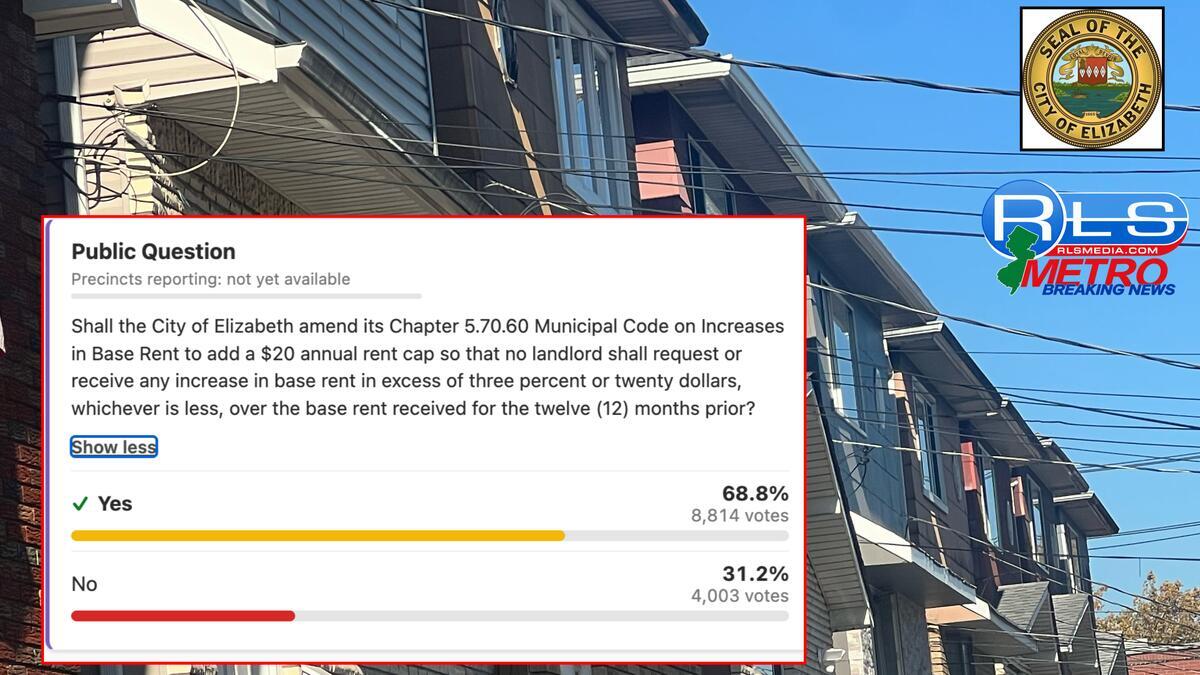
According to unofficial election results available Wednesday morning, November 4, approximately 68.8% of voters supported restoring a $20 limit on annual rent increases for apartments covered under the city’s rent control ordinance.
The results showed 8,814 votes in favor of the measure and 4,003 opposed.
Under the approved public question, landlords of covered properties would be restricted from increasing monthly base rent by more than 3% or $20 over a 12-month period, whichever is less.
To put that into perspective, someone paying $1,500 per month could ordinarily face a $45 yearlyincrease under a 3% adjustment. With the new restriction, that increase would generally be limited to $20.
That difference might not seem like much to some, but for a senior citizen on a fixed income or a family already struggling with groceries, utilities and transportation, every dollar matters.
The Elizabeth decision comes after years of debate over rent protections.
According to Rutgers Law School, housing advocates organized a petition campaign to restore the city’s former $20 rent increase limit, which had been replaced by a 3% cap in 2022.

Landlords challenged the proposal in court, arguing that the restriction was unconstitutional.
In July, a Union County Superior Court judge dismissed the challenge, allowing the question to move forward to voters.
Not everyone believes the restriction will benefit the city.
Attorney Matthew Moench, who represented landlords challenging the measure, warned that the proposal could ultimately hurt tenants.
In comments previously reported by New Jersey 101.5, Moench said the restriction would “do significant harm to the standard of living in Elizabeth.”
His concerns reflect a broader argument among property owners who say restrictions on rental increases could make it more difficult to cover maintenance, property taxes, insurance and other operating expenses.
Still, the larger conversation about housing affordability is difficult to ignore.

Just look at Harrison.
The Hudson County community has undergone a remarkable transformation over the past several years, with large residential buildings replacing former industrial properties and bringing thousands of apartments to an area once known primarily for its working-class neighborhoods.
The redevelopment has brought new businesses, residents and investment. But it has also raised a question many longtime residents are asking: Who can actually afford to live in these new buildings?
According to Zillow rental market information from October 2026, the average advertised rent in Harrison was approximately $2,600 per month, about $200 higher than a year earlier.
For someone earning $60,000 annually, that means more than half of their gross monthly income could go toward rent alone.
And Harrison is hardly the only community experiencing these changes.
Neighboring Kearny has also seen new residential development and rising housing costs, while communities throughout Essex, Hudson and Union counties continue to face questions about affordability.
There is nothing inherently wrong with redevelopment. New housing, businesses and investment can benefit communities in many ways.
But the challenge is making sure that growth does not leave longtime residents, working families and seniors struggling to find a place they can afford.
The numbers help explain the concern.
According to information cited by Rutgers Law School from the Housing and Community Development Network of New Jersey, a worker in Union County would need to earn approximately $42.40 per hour to afford a standard two-bedroom apartment with a fair market rent of $2,205 per month.
The organization reported an average hourly wage of $26.92 in the county.
That is a significant gap between what many workers earn and what housing costs.
Elizabeth’s decision will not automatically change rent regulations in Harrison, Kearny, Newark or surrounding communities. The new limit also applies only to properties covered under the city’s rent control provisions.
And while supporters believe the restriction will help prevent displacement, the longer-term effects on housing conditions and property investment remain part of the debate.
Nevertheless, the vote brings renewed attention to an issue that reaches well beyond Elizabeth.
For many residents across northern New Jersey, the concern is no longer simply whether they can afford a newer or larger apartment.
It is whether they can continue living in the same community where they have worked, raised families and built their lives.
Elizabeth voters have now weighed in on that question, and their decision could become part of a much larger conversation about the future of affordable housing across the region.