
By: Richard L. Smith
For many New Jersey families, the dream of sending a child to college begins with excitement, but it can quickly turn into a difficult conversation about money.

With new federal financial aid changes now taking effect, students and parents are facing both opportunities and concerns as they prepare for the next academic year.
And for me, this isn’t just another education story. It’s personal.
According to the U.S. Department of Education, the Free Application for Federal Student Aid, better known as FAFSA, opened for the 2027–28 academic year on September 23, 2026, giving families additional time to apply for financial assistance.
The earlier opening and improvements to the application process are among the positive developments.
However, changes to Pell Grant eligibility and federal student loan borrowing limits could also create financial challenges for some families.

Under federal legislation enacted in 2025, new Pell Grant eligibility rules took effect for the 2026–27 academic year. Among the changes, students whose Student Aid Index reaches a certain threshold are generally no longer eligible for the grants, subject to limited exceptions.
The Student Aid Index is a financial aid calculation used to help determine a student’s eligibility for assistance. For the current academic year, the threshold is $14,790.
Meanwhile, the maximum annual Pell Grant award for 2026–27 remains $7,395. That amount is not necessarily the total financial aid a student can receive, since other grants, scholarships and assistance programs may also be available.
Certain family-owned businesses, farms and fishing operations now receive more favorable treatment in federal financial aid calculations. New federal provisions also create Pell Grant opportunities for students pursuing qualifying short-term workforce training programs.
These changes could help some families and students who might otherwise struggle to qualify for assistance or pursue career training.

But I’ve found during my research that there are concerns, too.
New limits on federal Parent PLUS loans, which took effect in July 2026, generally restrict new borrowing to $20,000 annually and $65,000 per dependent student, with exceptions for certain existing borrowers.
Supporters of borrowing limits argue that families should be protected from taking on overwhelming student debt.
On the other hand, families whose financial aid packages don’t cover the full cost of college may now have fewer federal borrowing options.
For parents already struggling to pay rent, mortgages, utilities, groceries and transportation expenses, that could make an already difficult financial decision even harder.

I honestly can understand the reasoning behind protecting families from excessive debt. But I also know what it’s like to grow up in a household where simply finding the money to attend college seemed impossible.

I grew up on South 12th Street in Newark. My mother didn’t have much money, and attending college wasn’t something I could automatically count on.
To be quite sincere, my academic record coming out of high school wasn’t particularly impressive. My SAT scores were terrible, although I always believed I was a smart kid who could accomplish much more than those numbers suggested.
College seemed like a distant possibility.
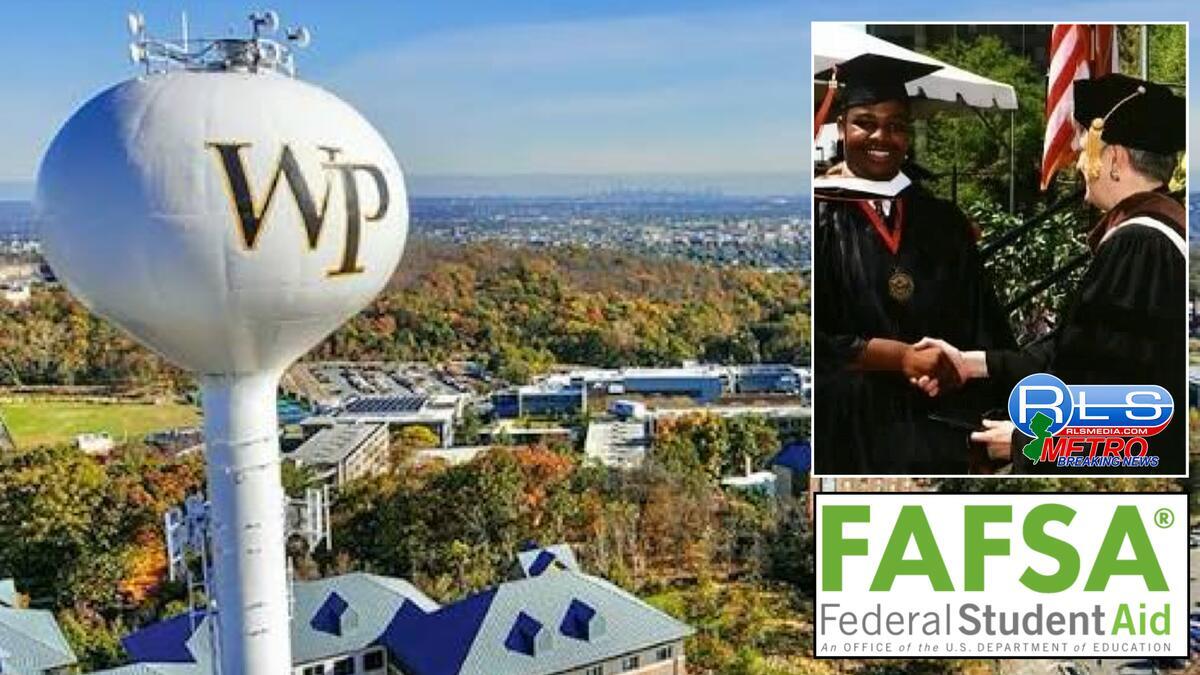
But in the 1990s, I was given an opportunity to attend William Paterson University through financial assistance and New Jersey’s Educational Opportunity Fund, commonly known as EOF.
That opportunity really helped change the direction of my life.
I don’t tell that story to encourage students to perform poorly in school or to suggest that academics aren’t important. They absolutely are.

I share it because sometimes a young person’s circumstances, financial background or struggles during high school don’t fully reflect that student’s potential.
And sometimes, all a person needs is an opportunity to prove what they’re capable of accomplishing.
That’s why I have mixed feelings about some of these federal financial aid changes.
I support making the FAFSA process easier, providing families with more time to apply and creating additional opportunities for students who want to pursue careers through workforce training.
I also understand why excessive student borrowing is a concern.
But I worry about young people who may be caught in the middle, particularly those from communities where financial resources are already limited.
New Jersey’s Educational Opportunity Fund continues to provide assistance to eligible students from economically and educationally disadvantaged backgrounds. The program offers more than financial assistance, including academic counseling, tutoring and other support services.
Other state programs, including Tuition Aid Grants, may also help eligible students cover college expenses.
For students who plan to attend college during the 2027–28 academic year, New Jersey’s Higher Education Student Assistance Authority lists an April 15, 2027, FAFSA or qualifying state alternative application deadline for returning Tuition Aid Grant recipients.
New applicants and students who did not receive a Tuition Aid Grant during the previous academic year generally have until September 15, 2027, for the fall and spring semesters.
Families should apply early, review their eligibility and speak with financial aid counselors about federal, state and college assistance.
Looking back, I sometimes wonder what my life would have been like if those opportunities hadn’t been available to me.
Would I have attended William Paterson? Would I have earned my degree? Would I have followed the same professional path?
I really don’t know.
What I do know is that financial aid gave a young man from Newark, whose family didn’t have the resources to pay for college, a chance to pursue something bigger.
And I believe that opportunity should remain available to the next generation.

Somewhere in Newark, Irvington, Paterson, Elizabeth or another New Jersey community, there’s a student who may be looking at college the same way I once did, wondering whether the money, the grades or life’s circumstances will keep that dream out of reach.
My message to that student is simple: Take your education seriously, work hard, ask questions and explore every available opportunity. Don’t let a difficult beginning convince you that your future has already been determined.
College isn’t the only road to success, but for young people who want to take that road, I hope we continue finding ways to keep it accessible.
Because when I look at these financial aid changes, I don’t just see federal rules, income calculations and borrowing limits.
I see the possibility of another kid from Newark getting the same chance I once received.
And to me, that opportunity is worth protecting.
Families seeking assistance can apply through StudentAid.gov and learn more about New Jersey financial aid programs at HESAA.org.