
By: Richard L. Smith
Authorities in Camden County say two long-unsolved homicide cases from the 1990s have now been cleared, following breakthroughs in DNA technology that identified a suspect more than two decades after his death.

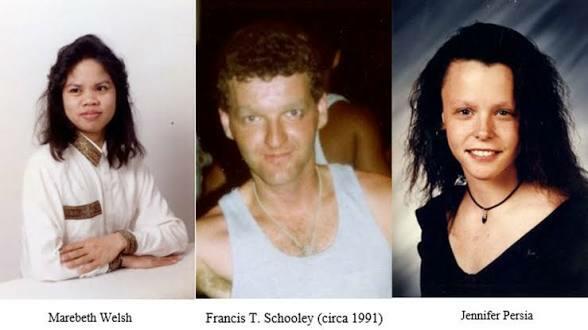
According to information released by the Camden County Prosecutor’s Office, investigators determined that Francis T. Schooley, of Mantua Township, was responsible for the killings of 24-year-old Marebeth Welsh of Woodlynne and 16-year-old Jennifer Persia of Magnolia.
Schooley died in 2000 at the age of 39, but officials said he would have faced charges in both cases if he were still alive.
The cases were revisited after the prosecutor’s office established a Cold Case Homicide Unit in 2024, focusing on unsolved investigations that could benefit from modern forensic tools. Detectives resubmitted key evidence for advanced DNA testing, which revealed the same unknown male profile linked to both crime scenes.
Through genetic genealogy and kinship analysis involving Schooley’s relatives, investigators were able to confirm his identity as the source of the DNA.
Officials said the analysis showed it was millions of times more likely the DNA belonged to a member of Schooley’s family than to an unrelated individual.
Detectives also uncovered connections between Schooley and both victims through prior work and personal associations.
Welsh was found dead on a Camden sidewalk in November 1993 after being strangled and sexually assaulted. Months later, in April 1994, Persia was discovered inside a Magnolia home with multiple stab wounds and evidence of strangulation.
Despite early investigative efforts, both cases remained unsolved for decades due to the lack of DNA matches at the time.
Prosecutor Grace C. MacAulay said the identification brings long-awaited answers to the victims’ families, crediting both advancements in forensic science and the persistence of investigators who continued working the cases over the years.
Local officials noted that while the outcome cannot undo the tragedies, it offers a measure of closure to families and communities that have carried the weight of these cases for decades. 
The investigation included multiple rounds of testing, interviews, and collaboration with forensic laboratories specializing in genetic analysis.
Authorities emphasized that efforts to solve cold cases will continue, with investigators committed to pursuing justice regardless of how much time has passed.