

By: Richard L. Smith
Photos: Henry Okyere
There are some mornings that unexpectedly take you back home.
Yesterday was one of those mornings for me.

As I traveled through Essex and Union counties visiting four Leaguers, Inc. facilities for its “Dad, Walk Your Child to School” initiative, I found myself thinking about a little boy growing up in Newark’s Central Ward in 1980.
That little boy was me.
I can still remember waking up and getting dressed at our home at 777 High Street, now Dr. Martin Luther King Jr. Boulevard, preparing for one of the biggest journeys of my young life.
Kindergarten.
My dad and I made our way down Somerset Street toward Louise A. Spencer Elementary School. I had no idea what awaited me inside that building. I was nervous. Probably more afraid than I wanted anyone to know.
But I had my Superman walking beside me.
Dad held my hand and walked me to school, eventually passing me off to my first teacher, Ms. Ruckers.
At that age, I didn't understand educational engagement, school readiness, family partnerships or any of the terminology adults use today.
I just knew Dad was there.
Nearly five decades later, that memory came rushing back as I watched fathers, grandfathers, uncles, male caregivers and community leaders do something remarkably simple: walk beside a child.
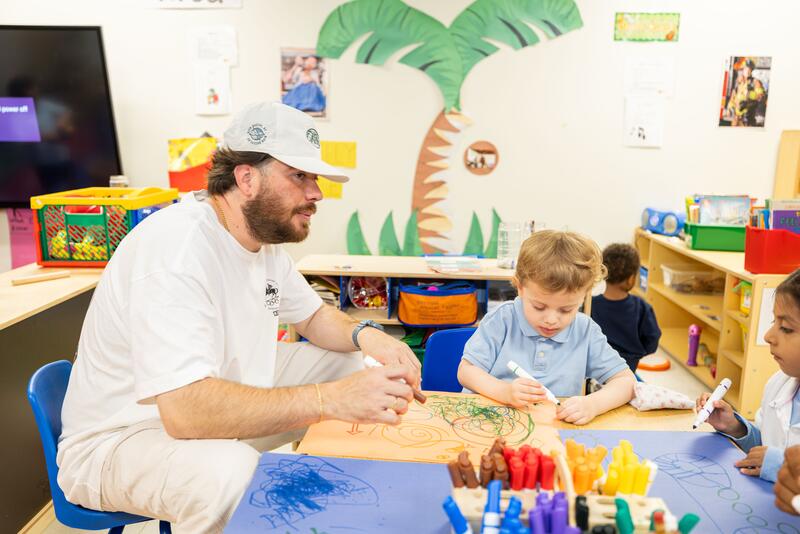
The day began at Leaguers' headquarters on University Avenue in Newark. We loaded into the agency's vehicle and began a tour that would take us to four of Leaguers' 15 facilities, including sites in Newark, Irvington, Roselle/Linden and Elizabeth.
I expected to cover an event.
I didn't expect to relive a piece of my childhood.
There were butterflies in my stomach as we approached the first group of children and families because I knew what I was looking for.
I wanted to see Superman. And I saw him everywhere. Yup, he didn't always have a cape.
Sometimes Superman wore work boots. Sometimes a suit. Sometimes jeans and sneakers. He was a father rushing to work after drop-off, a grandfather stepping in, an uncle showing support or a community leader standing at the schoolhouse door.
The message was the same: I'm here.
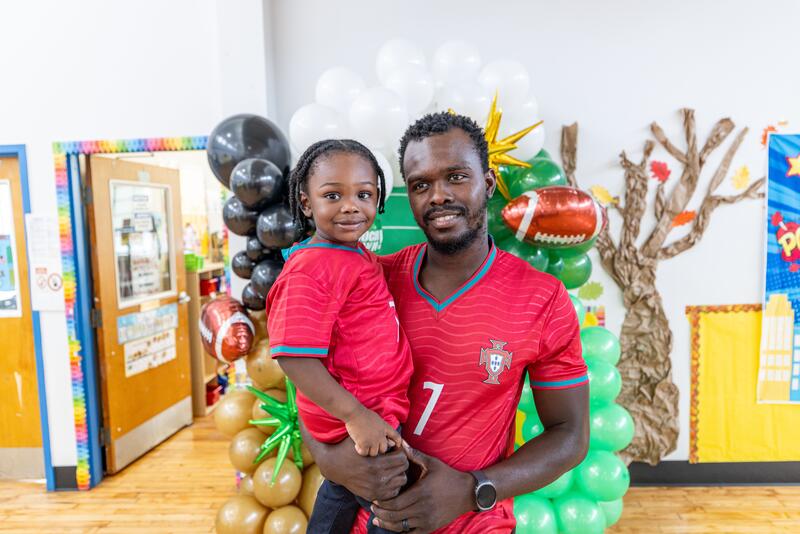
The sports-themed morning invited men and children to “huddle” together, and throughout the tour, that theme became a fitting metaphor for what Leaguers was trying to accomplish.
A good huddle brings everyone together. It reminds each person that he has a role. And when the huddle breaks, everyone moves toward the same goal.
On this morning, that goal was our children.
At 999 Broad Street in Newark, West Ward Councilman Dupré Kelly said what we were witnessing also challenged an old stereotype about fathers, particularly fathers in urban communities.
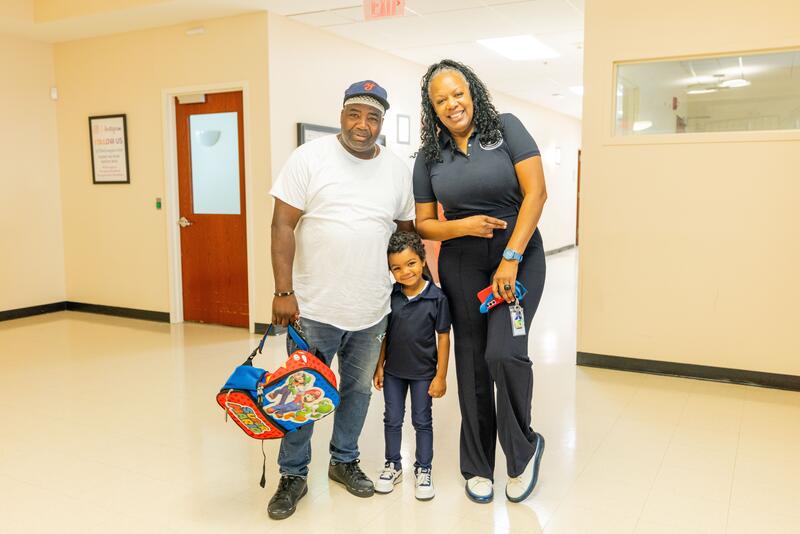
Kelly pointed to the fathers he saw bringing children to school that morning as evidence of something he says happens every day but often receives far less attention.
Parents are working, families are navigating difficult schedules, and mothers and fathers may not always live under the same roof, he explained, but both still have an important role in a child's development.
“It takes a village,” was at the heart of Kelly's message.
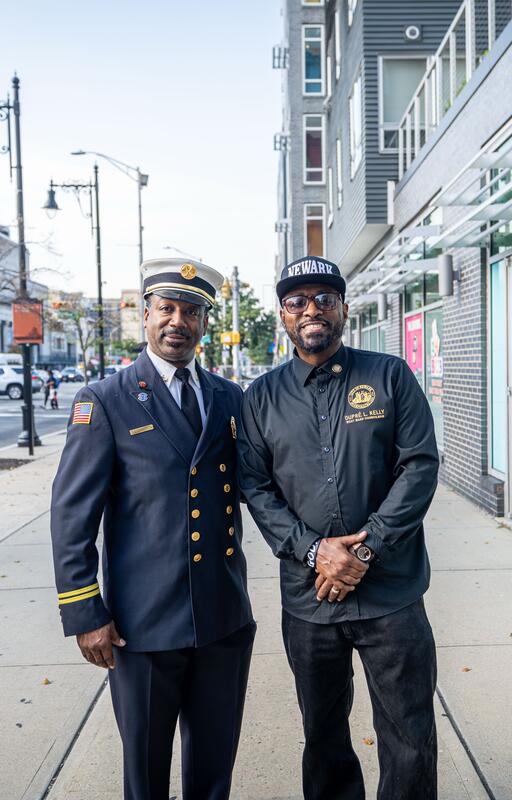
Teachers are part of that village. Parents are part of it. Elected officials and community members are part of it.
And fathers are certainly part of it.
That same spirit followed us across county lines.
At the Roselle/Linden location in Roselle, there was a genuine community atmosphere as children arrived alongside the men in their lives.
Linden Mayor Derek Armstead spoke about the importance of quality time between fathers and their children, acknowledging that work and the responsibility of providing for a family can sometimes limit how much of that time fathers have.
But that makes the moments they do have even more valuable.
Armstead also spoke about the closeness between Roselle and Linden, two communities where families frequently know one another across municipal boundaries.
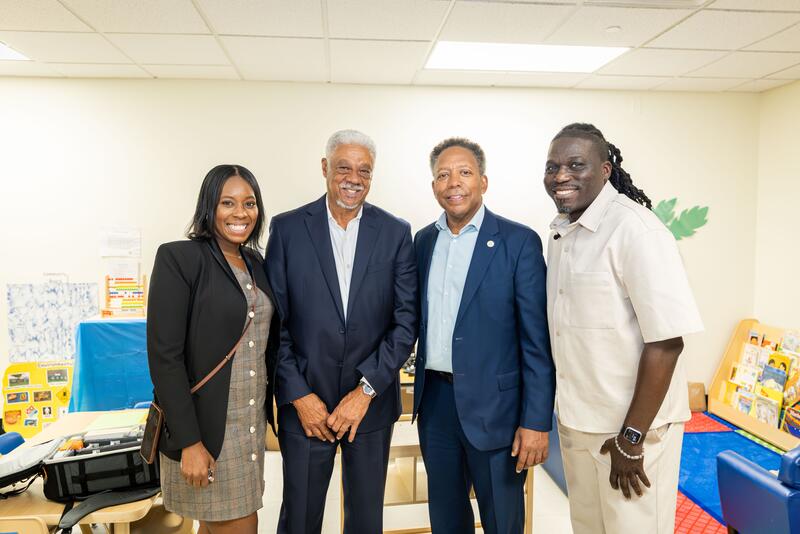
Supporting children, he said, ultimately strengthens the future of those communities.
Roselle Mayor Donald A. Shaw offered a message that captured much of what I had been seeing throughout the morning.
“Fatherhood is more than being a parent,” Shaw said. “It is about being present, providing guidance, setting an example, and giving our children the love and support they need to become the best versions of themselves.”
The mayor noted that a father's words, actions and presence can help shape a child's confidence, character and future.
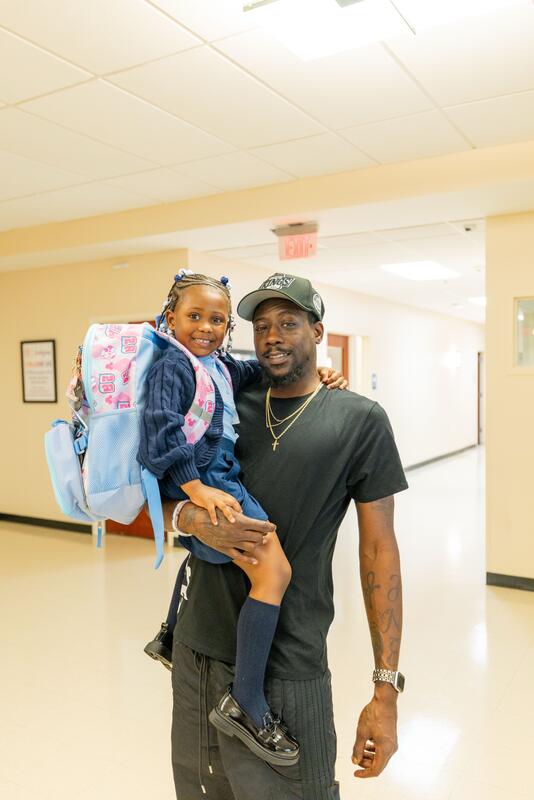
“Sometimes something as simple as walking your child to school can create an opportunity to talk, listen, encourage, and strengthen the bond between a father and his child,” Shaw said.
And then he made perhaps the most important point of the morning.
“This initiative is a reminder that fatherhood is not just about one day. It is about showing up, stepping up, and being there for our children every day.”
It wasn't Father's Day.
But for a few hours, it certainly felt like a celebration of fathers and the other men who show up for children.
The Rev. Moise “Mo” Paul watched fathers and grandfathers arriving with children in Roselle and said male involvement in education needs to be seen as just as important as the other responsibilities traditionally associated with fatherhood.
A man may be viewed as a protector or provider, Paul explained, but his responsibility does not end there. Fathers also help establish a child's attitude toward learning from the earliest years.
His message was clear: education belongs in the fatherhood conversation, too.
Linden Public Schools Superintendent Dr. Atiya Y. Perkins expanded that conversation to the importance of early childhood education itself.
With three- and four-year-olds beginning their educational journeys, Perkins said the foundation built during those years becomes even stronger when families are involved.
Men are recognized for many things in society, she noted, but the commitment they demonstrate simply by consistently being present does not always receive the same attention.
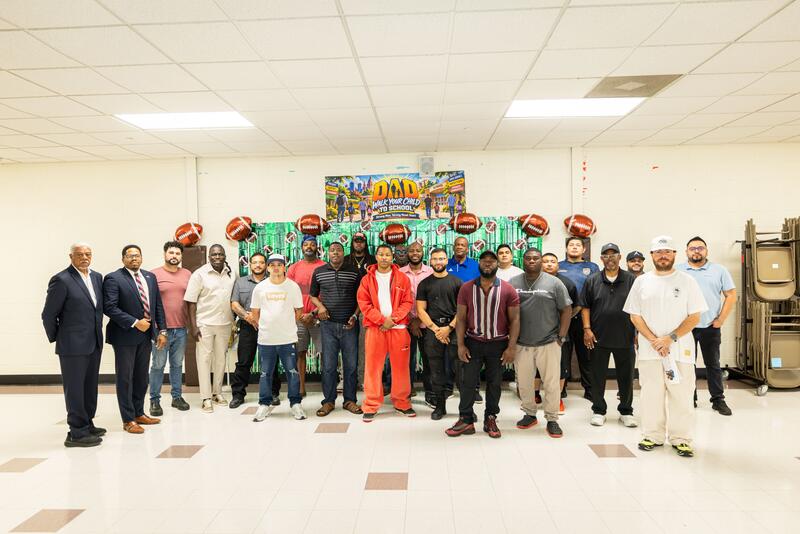
This morning gave everyone an opportunity to say thank you.
Perkins also emphasized the value of structured early-learning environments, where children develop not only academically but socially.
Reading skills matter. Academic preparation matters. But so does learning how to play together, communicate, build relationships and experience human connection.
Those skills become especially important, she said, in a world increasingly shaped by artificial intelligence and technology.
The longer I traveled with the Leaguers team, the clearer it became that this was about far more than a ceremonial walk to the front door.
One father and longtime Leaguers program partner told me that fathers should be celebrated because so much of what men do for their children happens routinely and without recognition.
Taking children to school, being part of their experiences and simply showing up may be everyday acts, he said, but there is nothing wrong with occasionally shining a light on them.
His relationship with Leaguers goes even further.
Through his work providing financial education to parents, he said the partnership has helped several parents move into entrepreneurship, with approximately five or six becoming business owners.
Then he said something that stayed with me: It isn't just about child care. It's about family care.
That distinction says a lot about the mission of The Leaguers.
The organization provides comprehensive early childhood education and family support through Head Start and Early Head Start, working with children, families and communities on healthy development, school readiness and family engagement.
At our Elizabeth stop, site supervisor Deborah Brown's enthusiasm for her children and families was unmistakable.
Brown talked about the work required to bring fathers into the school environment — emails, conversations, reminders at morning drop-off and afternoon pickup and, perhaps most importantly, repeatedly telling fathers that they are welcome.
Even if a father couldn't remain for the entire event, Brown wanted him there for whatever time he could give.
She described the smile that comes across a child's face when Dad walks into the classroom.
“My dad came to my school.”
For a young child, that can become a lifelong memory.
I know because it became one of mine.
Brown also recalled previous efforts to engage fathers through activities such as basketball and expressed hope that additional father-focused activities could return.
Leaguers officials said that sustained involvement is precisely what they hope comes from the initiative.
Chief Program Officer Quiera Evans said walking a child to school may appear to be a small gesture, but its meaning to a child can be enormous.
It communicates three things: I am here. I support you. Your education matters to me.
Faheem Pollard, Leaguers' Director of Parent, Family and Community Engagement, understands that message from both sides.
Pollard was first introduced to Head Start as a parent himself. Opportunities to become involved helped him recognize the importance of showing up, an experience he says ultimately influenced the work he does today.
“Male engagement events like this change lives,” Pollard said.
His journey illustrates exactly what Leaguers hopes can happen when an organization doesn't merely invite parents through the door but makes them feel that there is a place for them once they enter.
Across the sites, there was food, laughter, photographs, conversation and community. Mayors, council members, educators, administrators, staff members and families mingled together.
And everywhere I looked, children were watching. That may have been the most important part.
Children were watching men show up.
They watched Dad walk through their school, watched Grandpa stand beside them and saw elected officials and community leaders tell fathers that their presence mattered.
For all the speeches, programs, decorations and activities, perhaps the most powerful thing that happened required none of them.
A child looked up and saw a man they loved standing there.
The sports theme asked everyone to huddle, but -a being an educator in NJ for over two decades- I know that a huddle doesn't accomplish much if everyone walks away afterward and forgets the play.
The challenge is what happens today, next week and months from now.
As our tour continued and eventually came to an end, I kept returning to 1980.
I could see Louise A. Spencer Elementary School and Ms. Ruckers waiting to receive a nervous little boy beginning kindergarten.
Most of all, I could see my Dad.
At the time, he probably thought he was simply walking his son to school.
He couldn't have known that his little boy would remember that walk nearly half a century later.
That's the thing about being present in a child's life. Adults don't always get to decide which moments children will carry forever.
Yesterday, somewhere inside four Leaguers facilities in Newark, Roselle and Elizabeth, there may have been another little boy or girl collecting one of those memories.
They reminded fathers, grandfathers, uncles and other men that there is a place for them in the classroom, in the conversation and throughout a child's educational journey. And they reminded the rest of us that when good men show up, we should recognize them, encourage them and make room for them to keep showing up.
Thursday morning wasn't Father's Day, and it didn't need to be.
It was a celebration of presence.
The Leaguers, with dads by their side, scored a TOUCHDOWN.